The Lord of the Rings: A Musical Tale has opened in Australia – and staffer Eorl the Young was there for the premiere. Here’s his review of the experience:
As reported previously on TheOneRing.net, the phenomenal production of The Lord of the Rings — A Musical Tale, that had been playing in the USA and New Zealand in 2024, finally made its debut in Australia this month.
The State Theatre, Sydney
I had the privilege of attending the Sydney premiere, and it was an unforgettable experience.
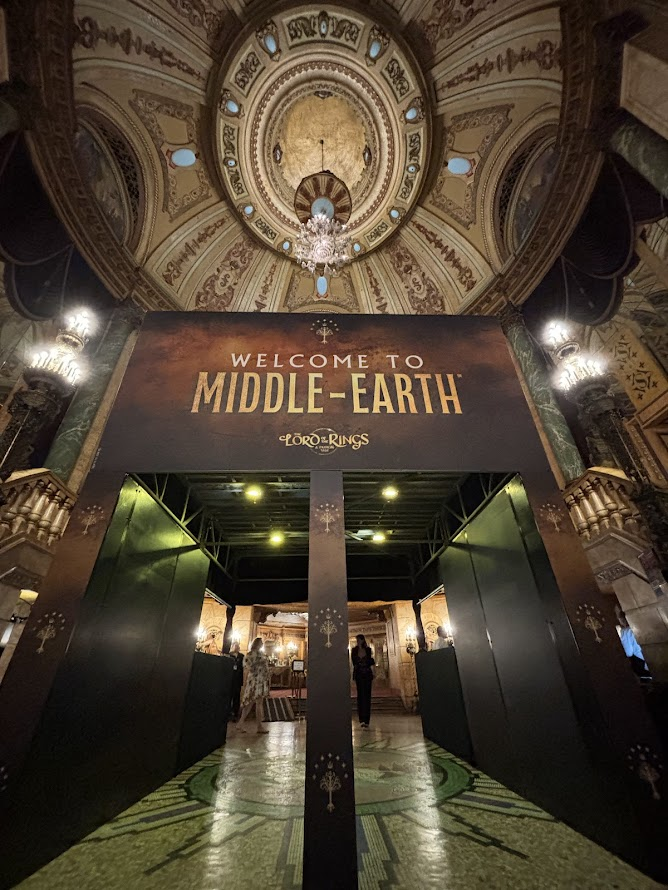
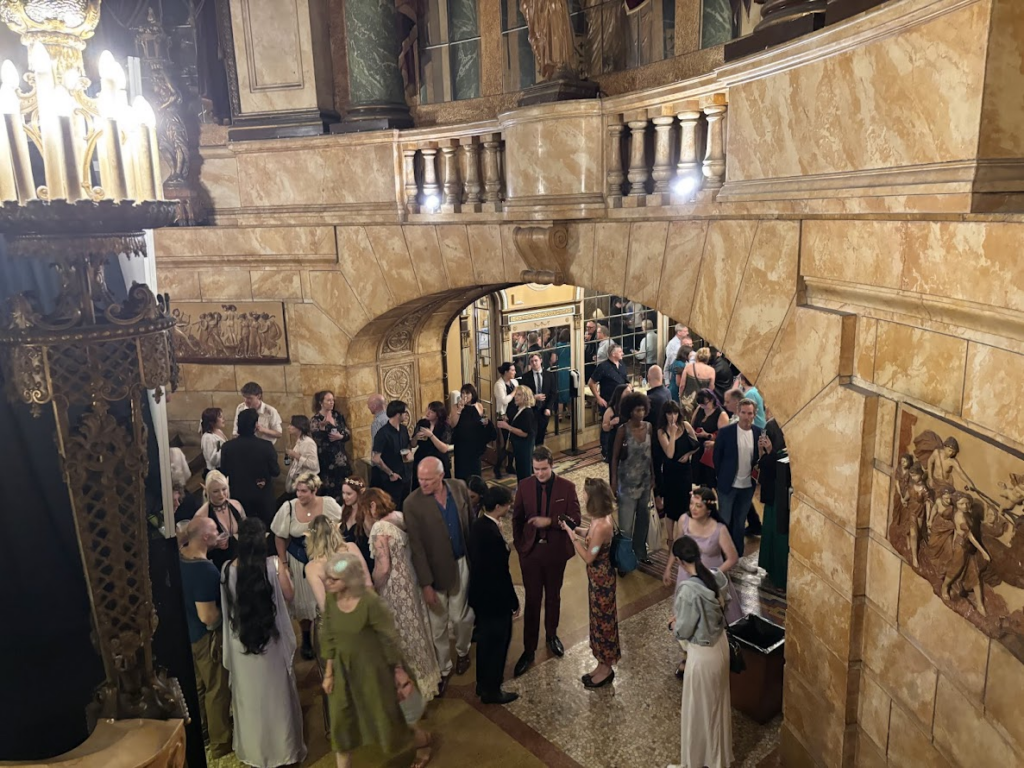
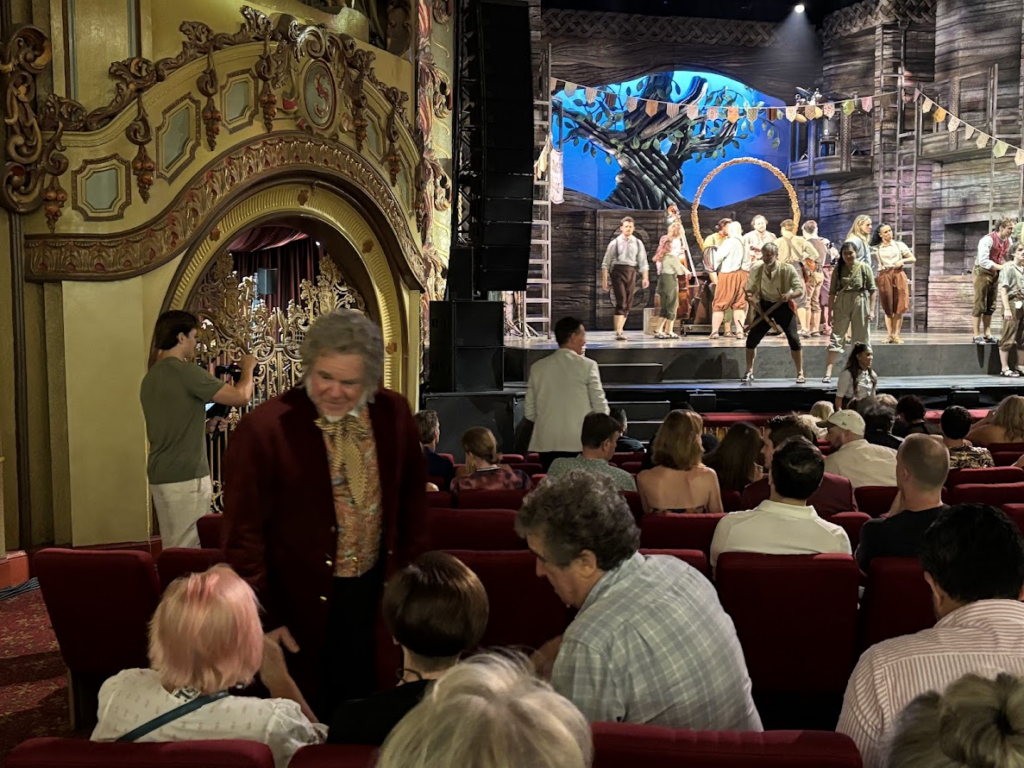
Held at the iconic State Theatre, with its ornate ceilings, art deco charm, and grand ambience, the venue felt perfectly suited for a tale as epic and timeless as Tolkien’s.
From the moment I walked up the street to the venue, it was clear this wasn’t just another night at the theatre — the excitement in the air was palpable even outside the theatre where fans queued up several hours before the show began.
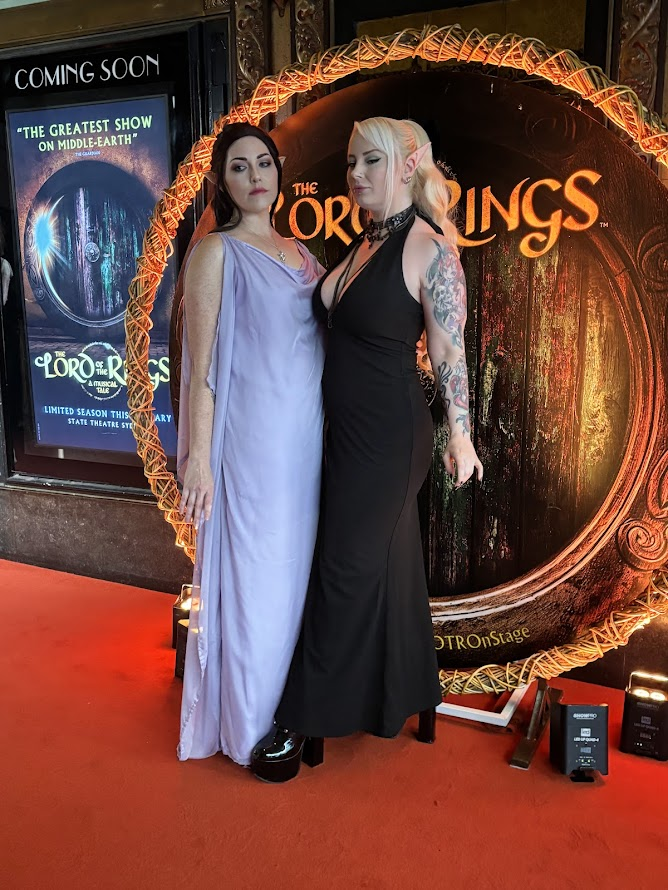
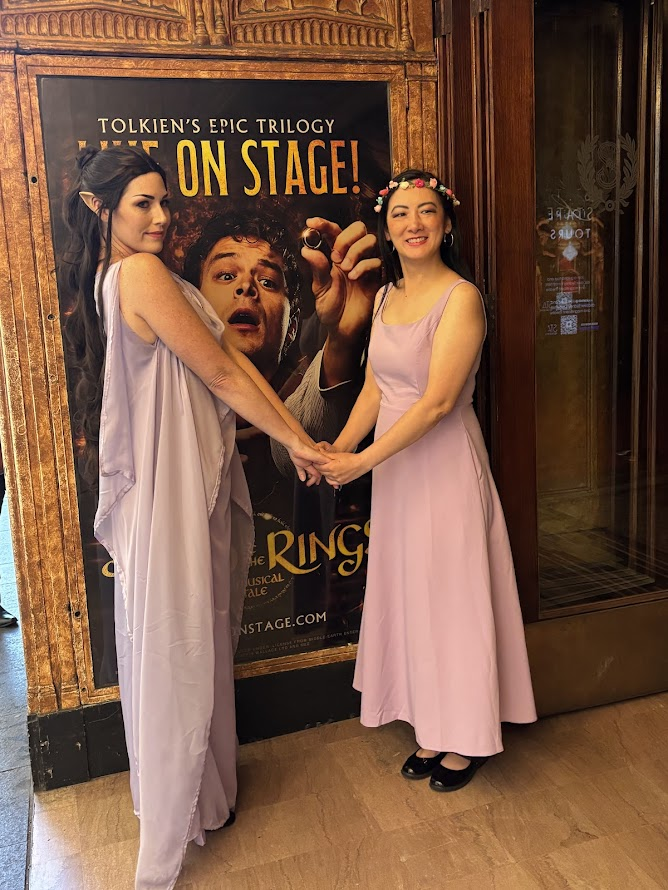
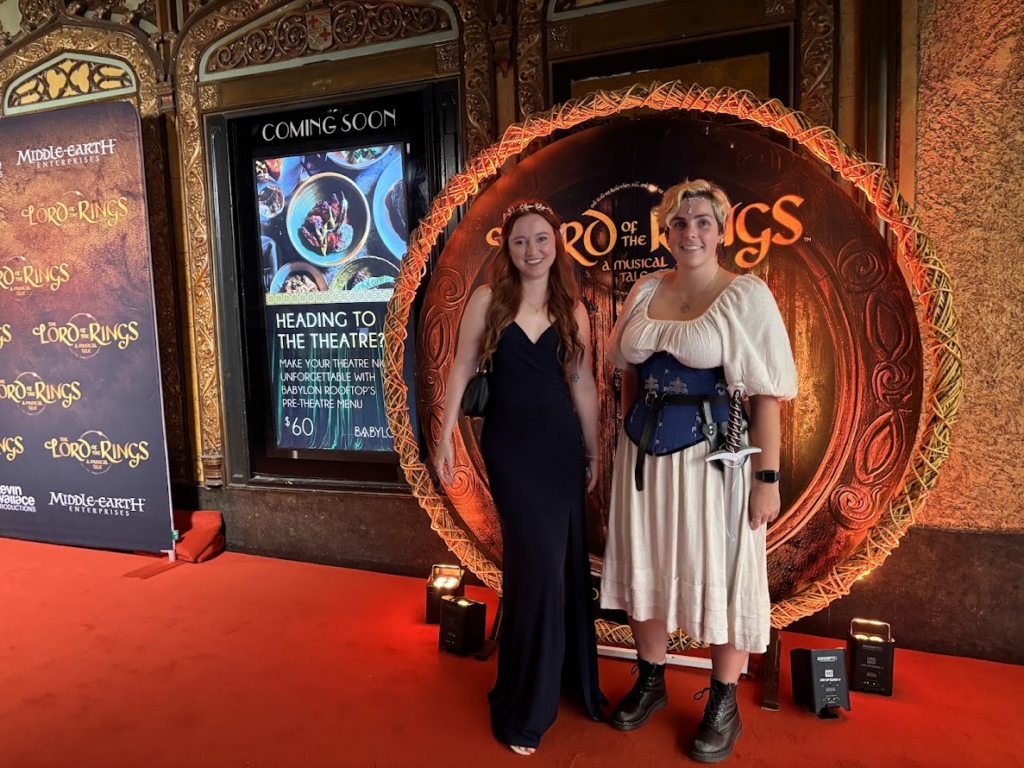
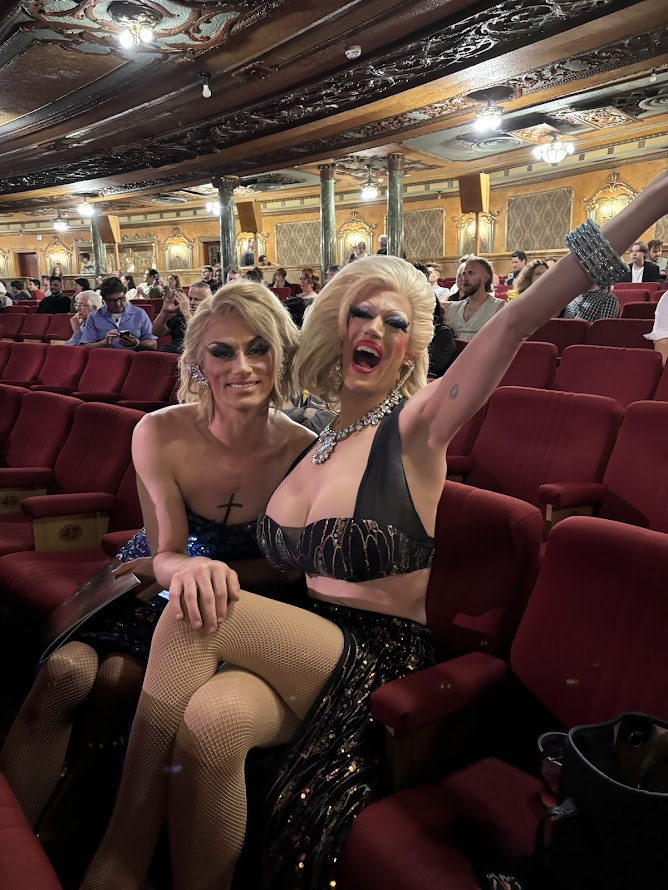
Many dressed as characters from Middle-earth and were in high spirits as they milled about the entrance; Boromir, several Elves (including two Arwens), a remarkably creative “sexy Shelob”, and an Eye of Sauron, all made an appearance.
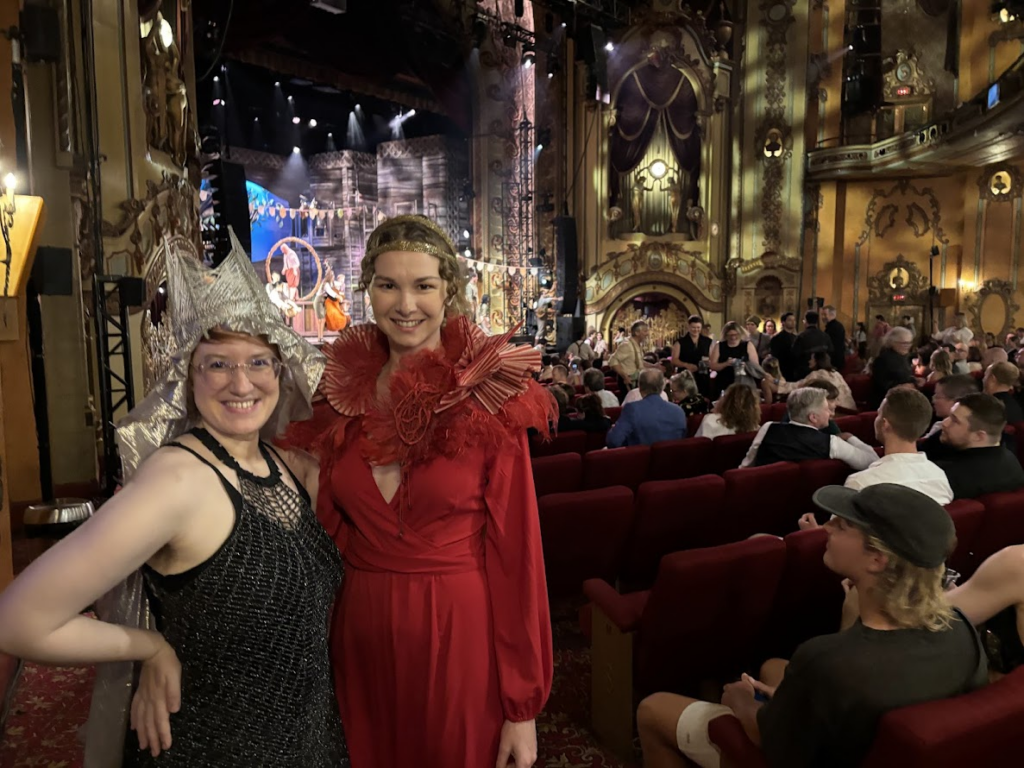
The State TheatreElves on the Red CarpetThe Two ArwensEowyn & BilboSexy Shelob & The Eye of SauronArwen & Boromir
The evening started on an unexpectedly warm and interactive note.
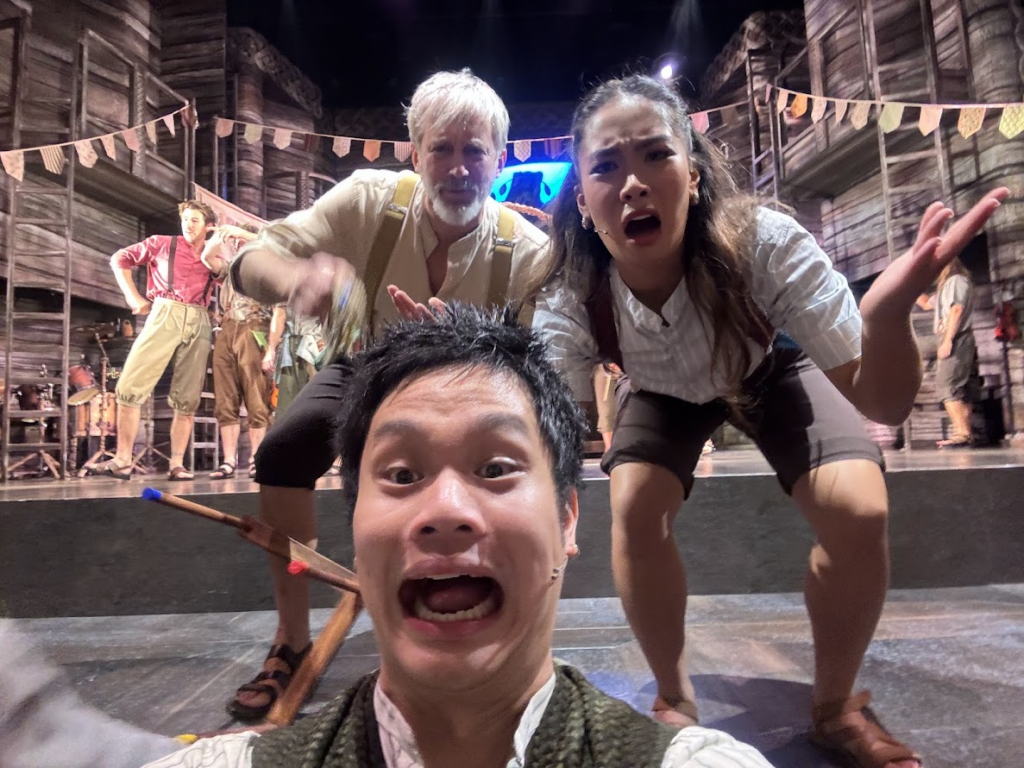
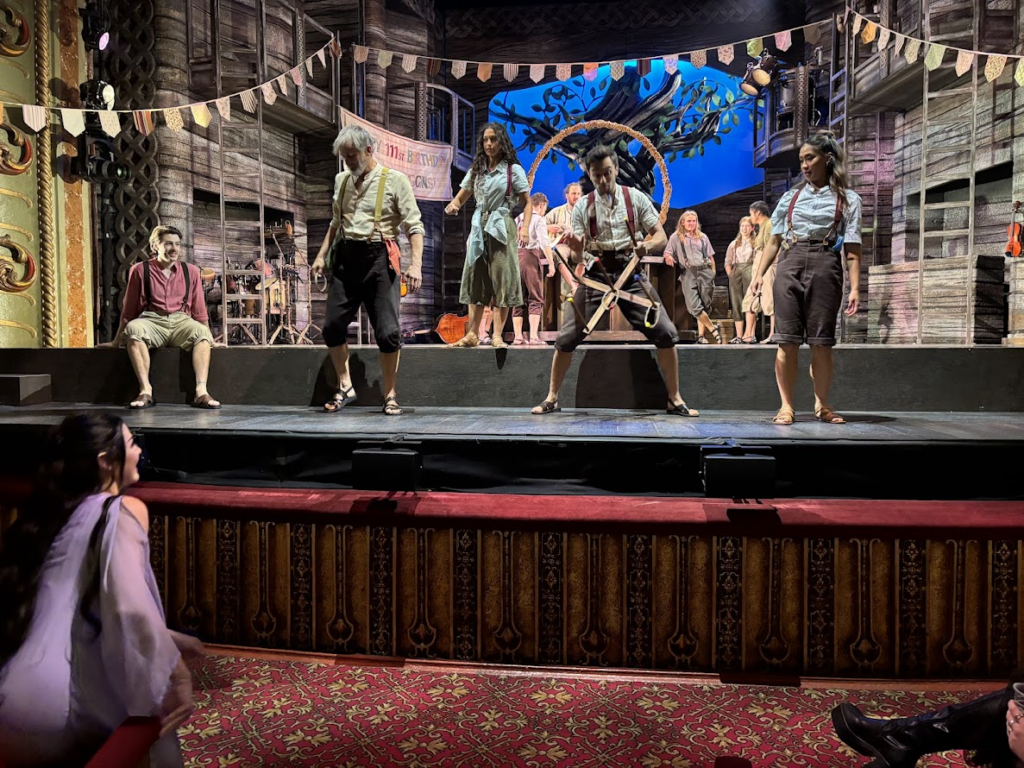
Before the performance began, the cast embraced the audience, singing impromptu Hobbit-themed songs accompanied by various musical instruments, and playing Shire-themed games like ring toss (the hilarious symbolism dawns on me as I write this).
Hobbits discover a magical object before the show (a mobile phone with a selfie cam!)Arwen tries her hand at Ring-toss in the Shire
When the cast were all assembled on stage, they invited everyone to join in a spirited rendition of Happy Birthday to Bilbo. We thought it was part of the pre-show fun and games, but the Happy Birthday song that we were invited to sing was in fact the beginning (and a very innovative one at that) of the musical itself, with the ending segueing perfectly into the beginning of Act I.
This playful, Hobbity opening instantly set the mood, drawing the audience into Middle-earth with a sense of camaraderie.
THE CAST
Unsurprisingly, the performances were nothing short of extraordinary, as the musical starred some of Australia’s acclaimed musical theatre performers and actor-musicians, including Jemma Rix as Galadriel, Ian Stenlake as Saruman, Rob Mallett as Strider, and Rarmian Newton as Frodo Baggins.
Bilbo (Laurence Coy) was adorable, both on and off-stage, to the point you wanted to talk with him for hours on end, and invite him to breakfast, and second breakfast, like an old friend.
Bilbo (Laurence Coy) mingling with his Birthday Party guests while Hobbits dance the Springle-ring on stage
Gandalf (Terence Crawford) commanded the stage with a voice and presence that perfectly captured his wisdom and gravitas.
Frodo and Sam’s portrayal was heartfelt and deeply moving throughout, their friendship anchoring the emotional core of the production. They were the leads after all, and their casting was as close to perfect as one might hope to expect.
Merry and Pippin brought energy and humor throughout, providing much-needed levity in darker moments.
And Galadriel! Galadriel was a true standout. Jemma Rix’s voice was constantly powerful and haunting, her every performance resonating throughout the theatre. Her solos were an absolute highlight, commanding the room every single time with their sheer vocal power. It isn’t a stretch to presume she left the audience spellbound each time she ended with a rousing crescendo, as I noted that there was always a momentary stunned silence before the audience applauded her performance.
Aragorn and Arwen’s unexpected duets brought tender moments of longing and love (yes, they kissed!)
Boromir (Rohan Campbell)
Boromir’s character brought intensity and humanity to his arc.
Fans will appreciate his performance knowing the fate that befalls him. That scene was a high point of the production, deeply emotional and handled with care.
After the show, the actor (Rohan Campbell) mentioned how much it meant to him to do justice to Boromir’s redemption. You could tell.
Extra special mention must go to Smeagol / Gollum, who was an absolute marvel from his first appearance until his final moment of moments. His physicality, rasping voice, and duality were all executed to perfection – yes, perfection, and perhaps beyond perfection.
This a role that will undoubtedly invite comparisons to Andy Serkis’s Gollum for an entire generation of LOTR fans, and yet the actor (Laurence Boxhall) delivered something fresh while staying true to the essence of Gollum. Chilling, silly, hilarious, menacing, pitiful… I could go on.
MUSIC AND SONGS
The musical took a bold step by introducing original songs rather than adapting Tolkien’s verses. While this might disappoint purists, the new music more than justified its inclusion.
“Forever and Always”, a poignant duet between Frodo and Sam, was my favourite. It brought a particularly memorable tone to the entire show, blending heartfelt emotion with an absolutely surprising, bone-chilling interruption from Gollum that sent shivers down my spine several times (without exaggeration). The actor is absolutely amazing in this role. This song, and the three-way performance, was one of the biggest highlights of the show for me.
Overall, the music wasn’t just functional; it added layers to the story. Each song — whether it was an intimate love ballad between Man and Elf, a melancholic duet between Hobbit mates, a sweeping chorus of Elves, or a raucous Orcish battle-song — felt deliberate and evocative.
While I missed Tolkien’s lyrics at times, the original compositions stood firmly on their own, supported by stellar performances.
I would actually hope the producers are able to record one of the live performances and release in some form of media at least the music, if not the entire live production, so fans who don’t have the ability to experience this performance in person can also have the opportunity to hear these songs.
STAGECRAFT AND VISUALS
The production’s technical achievements were nothing short of spectacular.
Bilbo’s disappearance at his Eleventy-first Birthday Party was executed with dazzling effects — light, fire, and smoke combining to create a truly magical moment.
The Nazgûl’s entrance was one of the most chilling sequences, with the actors weaving through the aisles as eerie lights and sounds amplified their menace. Seeing them so close in the darkened theatre was a spine-tingling experience.
Other standout moments included the Balrog in Khazad-dûm, brought to life through a clever interplay of light and fabric that evoked its fearsome presence without overloading the stage.
And then there was Shelob! A massive spider puppet emerged from the darkness, literally taking up the entire stage, its movements so lifelike and creepy that the entire audience gasped audibly. It was a jaw-dropping moment of stagecraft that has to be seen to be believed.
The show also excelled at juxtaposition. The Battle of the Pelennor Fields was brilliantly interwoven with Frodo and Sam’s climb up Mount Doom, keeping the tension high across both storylines at the same time. Magical!
Even quieter moments, like Frodo slipping into the “shadow world” when wearing the Ring, were handled with inventive lighting, sound, and acting that heightened the drama and left the audience in silence enough to hear a pin drop.
ADAPTATION AND STORYTELLING
Adapting The Lord of the Rings for the stage is no easy task, and compressing such a vast narrative inevitably means sacrifices.
Some scenes leaned heavily on exposition, which felt a little overexplained at times; but these moments helped orient audience members less familiar with the story. On the whole, the streamlined approach worked, focusing on the most essential arcs without losing the heart of Tolkien’s tale. For example, Theoden was the only character from Rohan featured in the Helm’s Deep sequence — a choice that made sense, given the constraints of time and complexity.
What stood out most was the creativity in how the production handled certain moments.
Treebeard was represented through voice acting alone, with Merry and Pippin reacting to an unseen presence in a way that felt natural and compelling. Kudos to both actors for bringing believability and upholding what could have been one of the weaker points of the production.
Likewise, Bree’s doorkeeper was conveyed entirely through sound effects and timing. The actor’s timing, paired with perfectly synced sound effects of the creaking gate, brought the scene to life despite its simplicity. It was a small but memorable moment, with the actor fully committing to the role and adding a touch of humor and authenticity that stayed with me.
These small, clever touches added unexpected charm and ingenuity to the storytelling.
HIGHLIGHTS AND FINAL THOUGHTS
The emotional resonance of the musical was undeniable.
The Grey Havens finale left many in tears, myself included, echoing the bittersweet beauty of Tolkien’s original ending. So many performances and moments lingered with me long after the curtain fell.
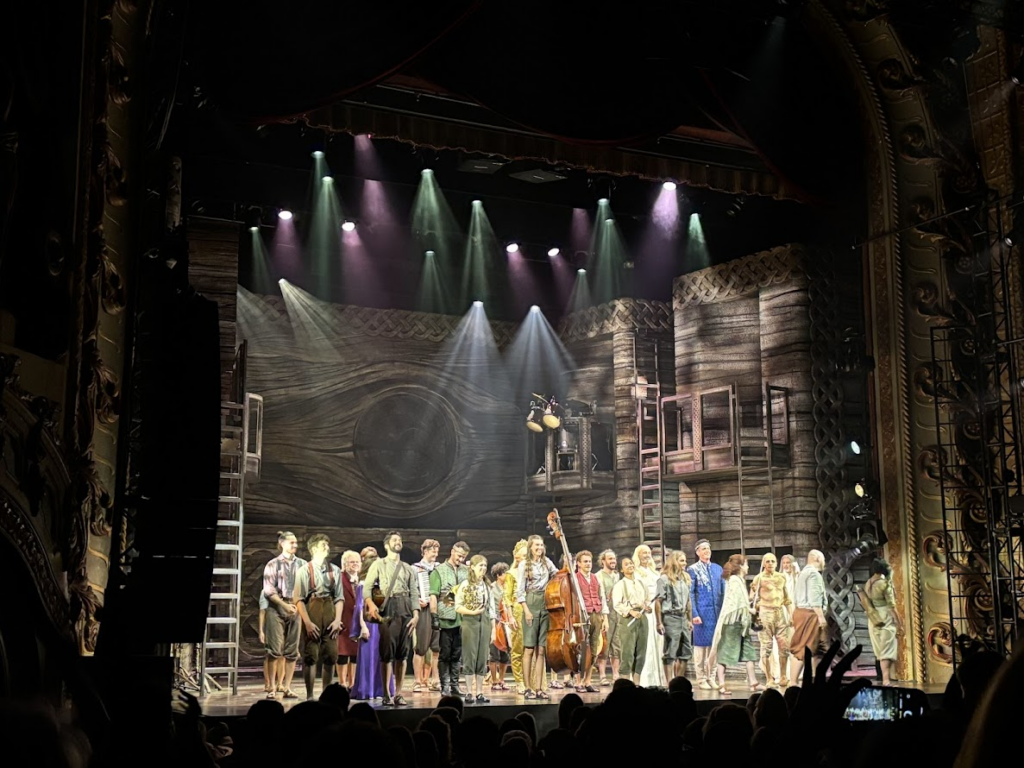
The cast bows out after a stellar performance
One thing that did stand out to me though was how understandable the production was. I spoke to a couple of people who had never read the books or seen the movies, and they loved it as a standalone work. It drew them into the story enough that they came away wanting to know more about Tolkien’s world. That’s a testament to how well the production works, as an adaptation, as a piece of theatre, and as a tribute to Tolkien.
Of course, no adaptation can please everyone.
Purists may find things to criticise — whether it’s the absence of Tolkien’s original songs, or the inevitable omissions in the story. But I don’t believe the aim of this production is to recreate The Lord of the Rings exactly as it exists in the books. That would be an impossible task anyway. Instead, the musical offers a fresh, deeply creative interpretation that stands as a testament to the power of theatre and the enduring relevance of Tolkien’s work.
Inside the theatre, I spoke to some of the wonderful designers behind the show’s many costumes, and as I was leaving, I spoke with a lovely couple whose daughter happened to have worked as a dresser for the show. They all shared how hard the cast and crew had worked in the lead-up to the premiere, with 13+ hour days to perfect every minute detail. It’s a testament to their dedication that the result feels so polished, from the acting and music, to the stunning technical effects.
Crew (Costume Designers)Crew (Dresser)
I certainly plan to attend again before the musical completes its Sydney run. There’s so much to take in, and so many blink-and-you-miss-it moments, that it’s worth a second (or third) viewing.
For fans of Middle-earth — or anyone who loves epic, immersive theatre — this is an experience you won’t want to miss. Tickets are available – for Sydney, other locations in Australia, and for the UK and Singapore – here.
Forth Eorlingas! The Lord of the Rings: The War of the Rohirrim is riding back into theatres in the UK from January 23rd – but this time, it’s the Japanese language version which fans can experience.
The English language voice actors are of course brilliant; and it will be fascinating to see this movie with an equally talented cast, who perhaps connect with the style of anime in a different way. It’s always thrilling to discover how different performers tackle a role, and with all the Japanese creatives involved in The War of the Rohirrim – from director Kenji Kamiyama down – and therefore the Japanese influence in many elements of the film (beyond and in addition to the anime style), it will be very interesting to see the film with this different perspective.
Here’s the official press release:
THE LORD OF THE RINGS: THE WAR OF THE ROHIRRIM TO BE RELEASED IN JAPANESE IN UK CINEMAS
FANS HAVE ANOTHER CHANCE TO WATCH THE ANIME ORIGINAL FEATURE ON THE BIG SCREEN AT PARTICIPATING CINEMAS NATIONWIDE FROM 23RD JANUARY
“The Lord of the Rings: The War of the Rohirrim” returns audiences to the epic world brought to life in “The Lord of the Rings” Trilogy, based on the revered books by J.R.R. Tolkien. For the first time, Warner Bros. Entertainment is releasing the Japanese language version of the film in UK cinemas, giving fans the opportunity to watch the film on the big screen in Japanese with English subtitles.
Set 183 years before the events chronicled in the original trilogy of films, “The Lord of the Rings: The War of the Rohirrim” tells the fate of the House of Helm Hammerhand, the legendary King of Rohan. A sudden attack by Wulf, a clever and ruthless Dunlending lord seeking vengeance for the death of his father, forces Helm and his people to make a daring last stand in the ancient stronghold of the Hornburg—a mighty fortress that will later come to be known as Helm’s Deep. Finding herself in an increasingly desperate situation, Héra, the daughter of Helm, must summon the will to lead the resistance against a deadly enemy intent on their total destruction.
Under the direction of award-winning filmmaker Kenji Kamiyama (the “Blade Runner: Black Lotus” and “Ghost in the Shell: Stand Alone Complex” TV series), the original feature is produced by Oscar winner Philippa Boyens, from the screenwriting team behind “The Lord of the Rings” and “The Hobbit” Trilogies, alongside Jason DeMarco and Joseph Chou, who, in addition to their many separate animation projects, collaborated on the “Blade Runner: Black Lotus” series. The executive producers are Fran Walsh, Peter Jackson, Sam Register, Carolyn Blackwood and Toby Emmerich. The screenplay is by Jeffrey Addiss & Will Matthews and Phoebe Gittins & Arty Papageorgiou, story by Addiss & Matthews and Boyens, based on characters createdby J.R.R. Tolkien. The team of creative collaborators returning from “The Lord of the Rings” Trilogy also includes Oscar winners Alan Lee and Richard Taylor, along with esteemed Tolkien illustrator John Howe.
The Lord of the Rings: The War of the Rohirrim (Japanese with English subtitles) is in participating UK cinemas from 23rd January
We’re thrilled to announce a new partnership between TheOneRing.net and the amazing folks at Signum Studios; and to let you know about an imminent project which you can support! Here’s our official press release:
FOR IMMEDIATE RELEASE
January 11, 2025
TheOneRing.net Partners with Signum Studios to Bring Deep-Dive Fan Content to Audiences Worldwide
For 25 years, TheOneRing.net has been a beacon for Tolkien fans — celebrating the Professor’s works with authenticity, community spirit, and a passion for well-researched stories. Today, we’re delighted to announce a new partnership with Signum Studios, known for producing in-depth, academically informed content that resonates with dedicated fandoms everywhere.
“We’re thrilled to join forces with Signum Studios,” says Chris Pirrotta, Co-Owner of TheOneRing.net. “Both of our teams share a commitment to creating thoughtful, inspiring projects that honor Tolkien’s vision and bring fans closer together. We can’t wait to see where this journey leads.”
Corey Olsen, President of Signum University (of which Signum Studios is the production branch), says, “Signum University has always admired the passion of the TORn community, and we are tremendously excited by what lies ahead!”
A Deep Dive Into Middle-earth: Rings & Realms: The War of the Rohirrim
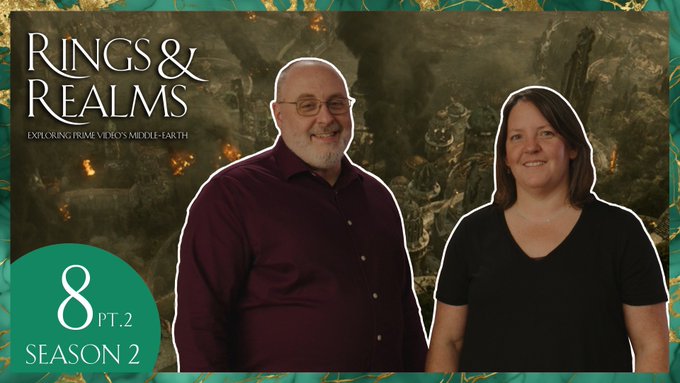
A project that celebrates just this type of collaboration is a Kickstartercampaign for “Rings & Realms: The War of the Rohirrim.” This documentary-style production channels the beloved “appendices” spirit by exploring the anime feature film about Helm Hammerhand and the origins of Helm’s Deep. This documentary is helmed (pun intended!) by the creative minds at Signum Studios — including Dr. Corey Olsen (widely known as “The Tolkien Professor”) and Dr. Maggie Parke (Studio Director and adaptation specialist) — and will also feature TheOneRing.net’s own greendragon (Kirsten Cairns) as part of the team.
Dr Corey Olsen and Dr Maggie Parke of Signum Studios
• Thoughtful Exploration: The Rings & Realms crew merges scholarly insights with fan-oriented storytelling, aiming to offer a deeper understanding of Tolkien’s lore.
• Community Engagement: Backers gain behind-the-scenes access, Q&A sessions, and even set visits — keeping our vibrant fan community at the heart every step of the way.
• Authentic Fan Spirit: True to TORn’s legacy, this project will invite fans to explore Middle-earth in a welcoming, celebratory way.
By supporting Rings & Realms, you’ll help us continue our mission of bringing richly researched, entertaining Tolkien content to audiences around the globe. Whether you’re a long-time TORn community member or new to TheOneRing.net, we invite you to be part of this exciting new venture.
How You Can Support
Visit our Kickstarter page to learn more about Rings & Realms: The War of the Rohirrim, pledge your support, and explore the rewards we’ve lined up for you. But hurry! The Kickstarter campaign closes at 7pm ET on Monday 13th January. With your help, we can continue celebrating Tolkien’s world — together.
About TheOneRing.net
Since 1999, TheOneRing.net has been a welcoming home for Tolkien fans, uniting a global community that embraces the spirit of exploration, discussion, and fellowship inspired by J.R.R. Tolkien’s works.
About Signum Studios
Signum Studios specializes in fan-focused, academically grounded media productions. Their goal is to bring beloved fictional worlds to life through engaging storytelling and thorough research — offering a fresh perspective for fans everywhere.
Here’s a Holiday gift for us all – The Lord of the Rings: The War of the Rohirrim will be available to watch digitally from Friday December 27th! We still heartily recommend seeing it on a big screen – with amazing surround sound – but if you can’t find a cinema near you, (or if you’ve seen it and want to watch it again), from this Friday, you can stream it at home.
What’s more, there is exciting Extra Content to be seen – and we are thrilled that Warner Bros. have given us an EXCLUSIVE clip to share with you as a sneak preview. Take a look:
Here’s the official press release about the digital release:
Burbank, CA, December 23, 2024 – New Line Cinema’s original anime feature “The Lord of the Rings: The War of the Rohirrim,” which returns audiences to the epic world brought to life in “The Lord of the Rings” Trilogy, based on the revered books by J.R.R. Tolkien, debuts Digitally at home on December 27.
“The Lord of the Rings: The War of the Rohirrim” continues the legendary “The Lord of the Rings” film franchise that debuted 23 years ago. The most awarded series in cinematic history, the six films have earned $6 billion at the global box office and won 17 Academy Awards. Directed by Peter Jackson, “The Lord of the Rings” Trilogy includes 2001’s “The Lord of the Rings: The Fellowship of the Ring,” 2002’s “The Lord of the Rings: The Two Towers,” and 2003’s “The Lord of the Rings: The Return of the King,” which were produced by New Line Cinema and WingNut Films and distributed by New Line Cinema, and “The Hobbit” Trilogy, which includes 2012’s “The Hobbit: An Unexpected Journey,” 2013’s “The Hobbit: The Desolation of Smaug,” and 2013’s “The Hobbit: The Battle of the Five Armies,” which were produced by New Line Cinema, Metro-Goldwyn-Mayer Pictures, and WingNut Films and distributed by Warner Bros. Pictures.
Set 183 years before the events chronicled in the original trilogy of films, “The Lord of the Rings: The War of the Rohirrim” tells the saga of the legendary House of Helm Hammerhand, the King of Rohan. When a clever and ruthless Dunlending lord attacks seeking vengeance for the death of his father, Helm’s daughter Héra must summon the will to lead the resistance or face total destruction.
Under the direction of award-winning filmmaker Kenji Kamiyama (the “Blade Runner: Black Lotus” and “Ghost in the Shell: Stand Alone Complex” TV series), the talented voice cast is led by Brian Cox (“Succession”) as Helm Hammerhand, the mighty King of Rohan; Gaia Wise (“A Walk in the Woods”) as his daughter Héra; and Luke Pasqualino (“Snowpiercer”) as Wulf.
Miranda Otto, who delivered an unforgettable, award-winning performance in “The Lord of the Rings” Trilogy, reprises her role as Éowyn, Shieldmaiden of Rohan, who serves as the tale’s narrator. The voice ensemble also includes Lorraine Ashbourne (Netflix’s “Bridgerton”), Yazdan Qafouri (“I Came By”), Benjamin Wainwright (“World on Fire”), Laurence Ubong Williams (“Gateway”), Shaun Dooley (“The Witcher”), Michael Wildman (“Fast and Furious Presents: Hobbs & Shaw”), Jude Akuwudike (“Beasts of No Nation”), Bilal Hasna (“Sparks”) and Janine Duvitski (“Benidorm”).
On December 27, “The Lord of the Rings: The War of the Rohirrim” will be available Digitally at home on participating digital platforms including Amazon Prime Video, AppleTV, Fandango at Home, and more.
DIGITAL ELEMENTS
“The Lord of the Rings: The War of the Rohirrim” on Digital contains the following special features:
Return to Helm’s Deep: History Becomes Legend
Middle-earth and Anime: A Marriage of Creativity
Héra: A New Hero for Middle-earth
BASICS
Digital Availability: December 27, 2024 Running Time: 134 minutes Rating: PG-13
About The Lord of the Rings: The War of the Rohirrim
The original anime feature “The Lord of the Rings: The War of the Rohirrim” returns audiences to the epic world brought to life in “The Lord of the Rings” Trilogy, based on the revered books by J.R.R. Tolkien. Under the direction of award-winning filmmaker Kenji Kamiyama, the talented voice cast is led by Brian Cox as Helm Hammerhand, the mighty King of Rohan; Gaia Wise as his daughter Héra; and Luke Pasqualino as Wulf. Miranda Otto, who delivered an unforgettable, award-winning performance in “The Lord of the Rings” Trilogy, reprises her role as Éowyn, Shieldmaiden of Rohan, who serves as the tale’s narrator. The voice ensemble also includes Lorraine Ashbourne, Yazdan Qafouri, Benjamin Wainwright, Laurence Ubong Williams, Shaun Dooley, Michael Wildman, Jude Akuwudike, Bilal Hasna and Janine Duvitski. With Kamiyama at the helm, the original feature is being produced by Oscar winner Philippa Boyens, from the screenwriting team behind “The Lord of the Rings” and “The Hobbit” Trilogies, alongside Jason DeMarco and Joseph Chou, who, in addition to their many separate animation projects,collaborated on the “Blade Runner: Black Lotus” series. The executive producers are Fran Walsh, Peter Jackson, Sam Register, Ken Kamins, Carolyn Blackwood and Toby Emmerich. The screenplay is by Jeffrey Addiss & Will Matthews and Phoebe Gittins & Arty Papageorgiou, story by Addiss & Matthews and Boyens, based on characters created by J.R.R. Tolkien. The team of creative collaborators returning from “The Lord of the Rings” Trilogy also includes Oscar winners Alan Lee and Richard Taylor, along with esteemed Tolkien illustrator John Howe. The music is by Stephen Gallagher, music editor of Peter Jackson’s “The Hobbit” Trilogy.
New Line Cinema and Warner Bros. Animation Present, in Association with Wingnut Films, a Warner Bros. Animation and Sola Entertainment Production, “The Lord of the Rings: The War of the Rohirrim.” The film is distributed theatrically worldwide by Warner Bros. Pictures.
If you’re curious to know more about this particular story from Tolkien, and its adaptation to the big screen, we have good news for you! TheOneRing.net is partnering with the team at Rings and Realms to create a deep dive documentary all about The Lord of the Rings: The War of the Rohirrim. Find out more about this exciting project, here.
It’s almost a week since the official opening in theatres of the epic animated movie The Lord of the Rings: The War of the Rohirrim. It’s definitely a film to see in the cinema; the inspiring soundtrack, rich, lush sound design, and sweeping, stunningly artistic vistas are best served by the biggest screen you can find, with an outstanding sound system.
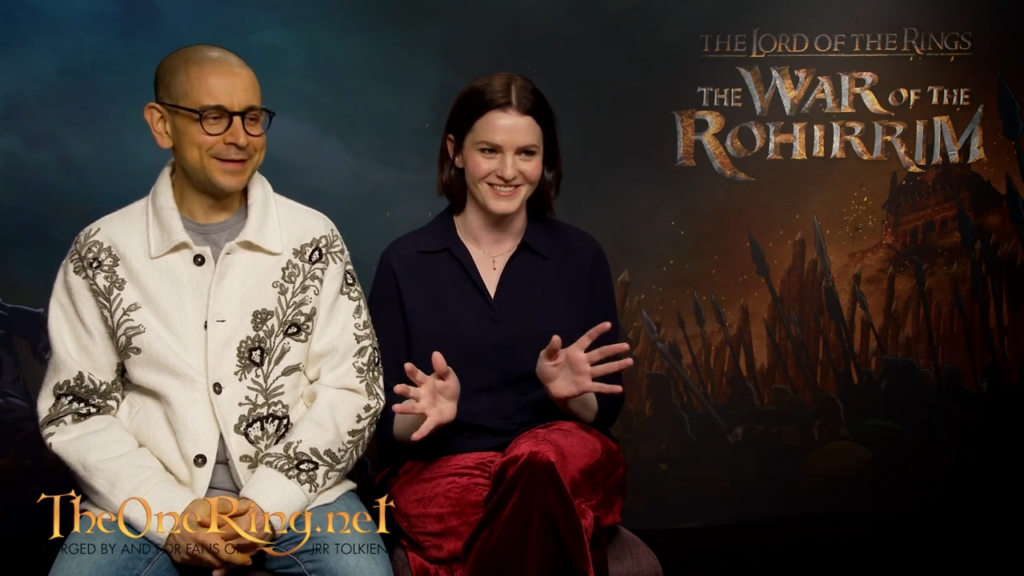
Earlier this month, staffer greendragon joined the press junket in London, following the red carpet premiere. There she was able to chat with producer Philippa Boyens, writers Phoebe Gittins and Arty Papageorgiou, and actors Gaia Wise and Laurence Ubong Williams. They covered topics such as the challenges – and liberations! – of voice acting; being awestruck by being in a room with Peter Jackson, Fran Walsh and Andy Serkis; and the warmth and ‘family’ nature of the Tolkien fandom. You can find all these interviews on our YouTube channel.
Quickbeam has shared his thoughts on the movie in this review, calling it ‘a terrific film, hands down’. Look for more thoughts and reviews from staffers, coming soon!
Meanwhile, TORn’s friend Dr. Maggie Parke (Director of Signum Studios, Co-Presenter and Producer of Rings and Realms) was able to attend the red carpet in London on December 3rd, and she shared her thoughts with us:
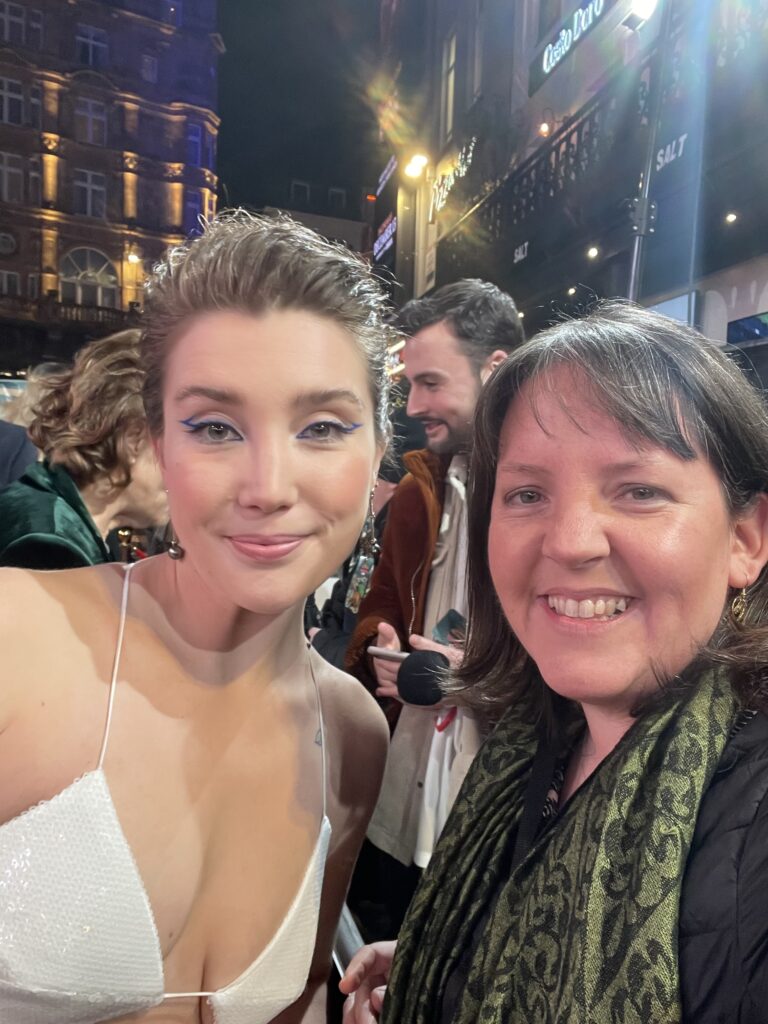
Dr. Maggie Parke with actor Gaia Wise
Premiere Report – London, December 3rd
As a lecturer of film adaptation and fan engagement, it is a rare and exhilarating experience to engage directly with the people behind a project that bridges beloved source material with cinematic innovation while relishing in the energy of the fan community. At the start of December, I had the privilege of attending the red carpet event and worldwide premiere for The Lord of the Rings: The War of the Rohirrim in London, UK. This animated feature is set in J.R.R. Tolkien’s (and Peter Jackson’s) Middle-earth, directed by Kenji Kamiyama. The film, executive produced by Peter Jackson and out of Warner Bros. Studio, is a gorgeous adventure through animation into Middle-earth, 183 years before the events from the trilogy.
The premiere was at the Odeon in Leicester Square, the traditional premiere spot in London, England. The Christmas market in the middle, twinkling fairy lights, market stalls, happy shoppers and holiday-makers, created a joyful vibe walking up to the theatre. Taking my place in the media pen on the red carpet allowed my geek heart to sing! Connecting with the cast and crew whose work on the Jackson trilogy ignited my love for filmmaking, adaptation, and production, was pretty dang magical. I relished the dynamic energy surrounding this ambitious anime project that is so different from what we know, but still so familiar from the visual’s of Jackson’s Middle-earth.
The night was vibrant and the theatre decked out for the Worldwide premiere with photo backdrops, a section for cosplayers and die-hard fans, contest winners, LED screens with video and posters, basins of actual fire, and a stage for cast and crew interviews during the red carpet time, which made the event more engaging, and like a show itself.
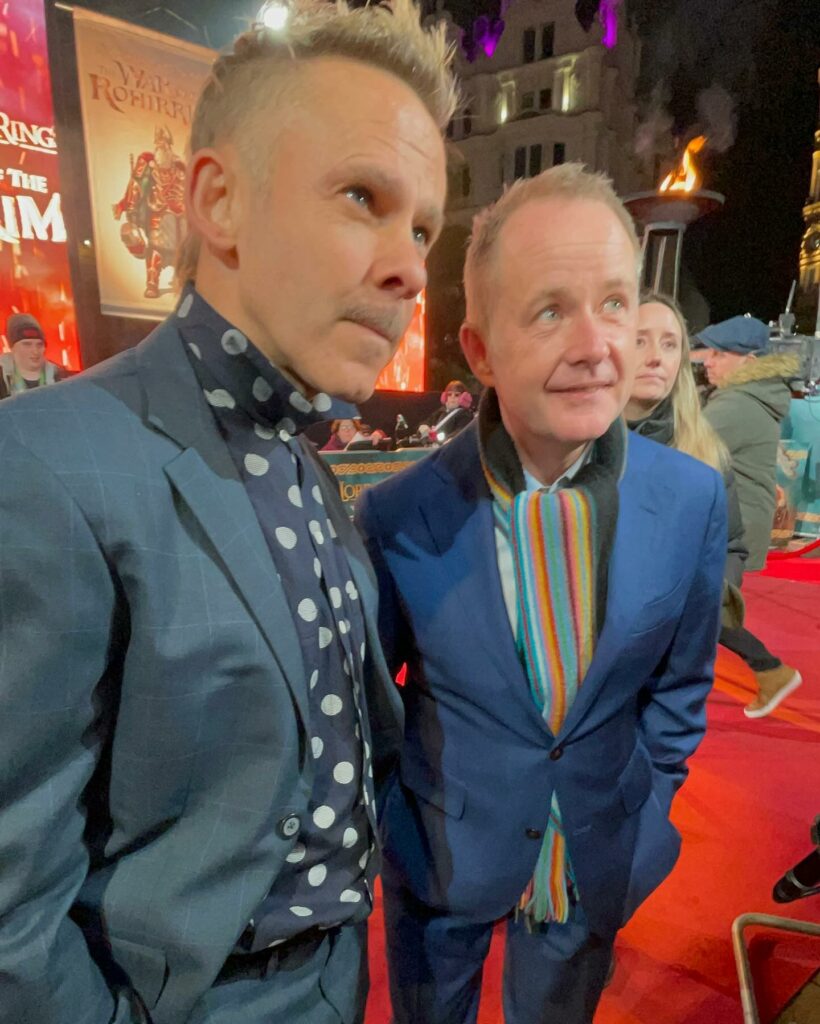
Dominic Monaghan and Billy Boyd on the red carpet
The Red Carpet: Conversations with Cast and Crew
The red carpet event was an excellent opportunity to speak with some of the key figures involved in bringing The War of the Rohirrim to life. My geek heart rejoiced as I was able to chat with Executive Producer Peter Jackson, producer Philippa Boyens, Producer Jospeh Chou, composer Stephen Gallagher, and voice cast members including Gaia Wise (Hera), Brian Cox (Helm Hammerhand), Laurence Ubong Williams (Fréaláf), and the glorious duo of Billy Boyd and Dominic Monaghan who cameo as orcs in WoR.
Phillips Boyens was SO excited to see TORn there, and spoke with passion about their approach to the film, describing how she viewed this as an opportunity fill out what we know of Rohan, and to blend the epic scope of Tolkien’s world with the unique narrative style of Japanese animation; the challenges and techniques that anime supplies are so different from a live-action film. She mentioned nods to deep Tolkien fans and the moments that they’ll appreciate, including adding some Old English (a nod to Tolkien) in the lament for Helm, sung by Lorraine Ashbourne (who voices Olwyn, and whose husband is Andy Serkis). She felt like the story “never let up….” And that while it was a fun challenge, she knew that it would get to where they wanted it to go.
Joseph Chou, the producer, highlighted the collaborative nature of the project. He discussed how the original idea came from Phillipa, and how they asked ALL of the questions to ensure this story could stay true to the world of Tolkien, but provide an exciting space to tell the story of Helm, and explore the character of his nameless daughter, now the heroine shield-maiden, Hera. He passionately described how carefully they wanted to ensure the film stayed true to the spirit of Tolkien’s world, and also was faithful to the Peter Jackson universe, while adding new layers to the mythology.
Stephen Gallagher, Gaia Wise, and Brian Cox
Stephen Gallagher, the composer, is a familiar friend of Tolkien in Jackson’s adaptation, and he was sound editor on the Hobbit films. He’s a long-time Tolkien fan, from the age 11 he devoured the books and the video games from the 80s. He said Hera’s theme is one of his favourite elements of his work on the film. He was inspired by Eowyn’s theme, but uniquely referenced it, so Hera’s is her own, but it is familiar to the tradition of shield-maidens, the culture of the Rohirrim, and the lineage of Eowyn.
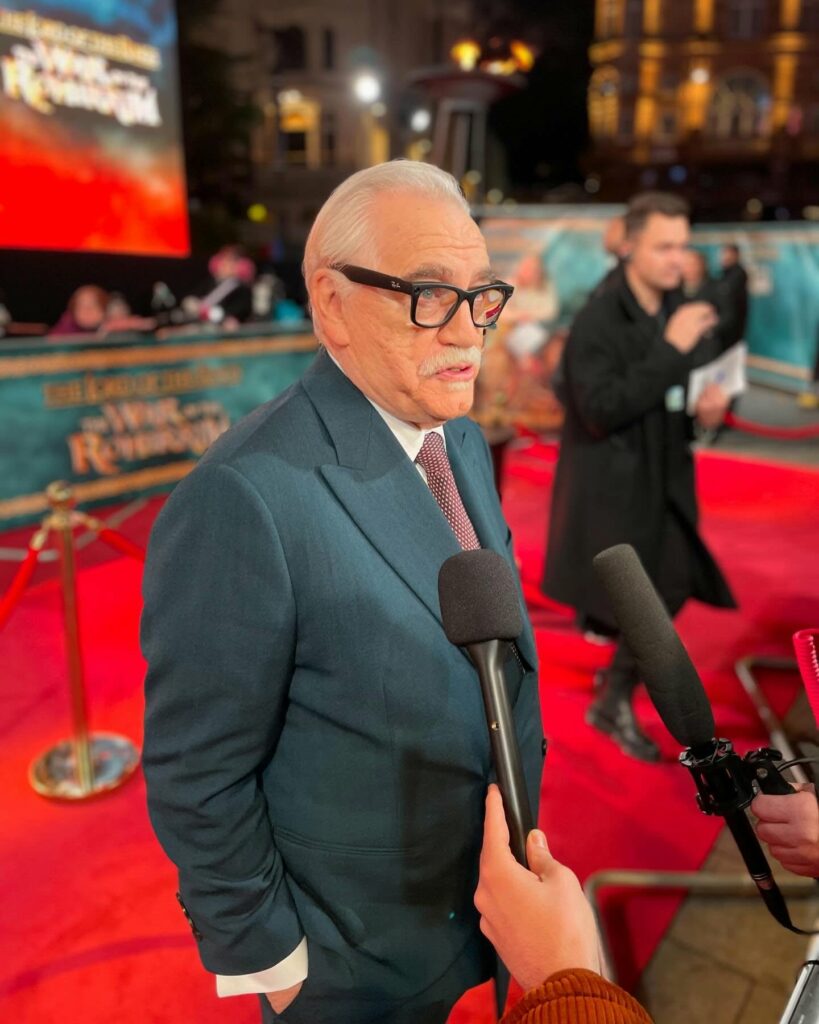
Brian Cox
Brian Cox, who voices Helm Hammerhand, felt his performance came from classic theatre training, and he shared his excitement at bringing such a legendary character to life. He also conveyed his deep respect for Tolkien’s legacy and his gratitude to Peter Jackson for providing his ‘gateway’ into Tolkien’s rich world.
Gaia Wise, the voice of Hera, said she felt in incredibly safe hands, with her ‘walking encyclopaedias of Philippa, Arty, and Phoebe’. She was grateful she was able to focus purely on developing the Hera of the script, because she knew that they had “mined all of the jewels that they could mine” from the text and world of Tolkien, so she used the script, but also them as resources for making Hera come to life.
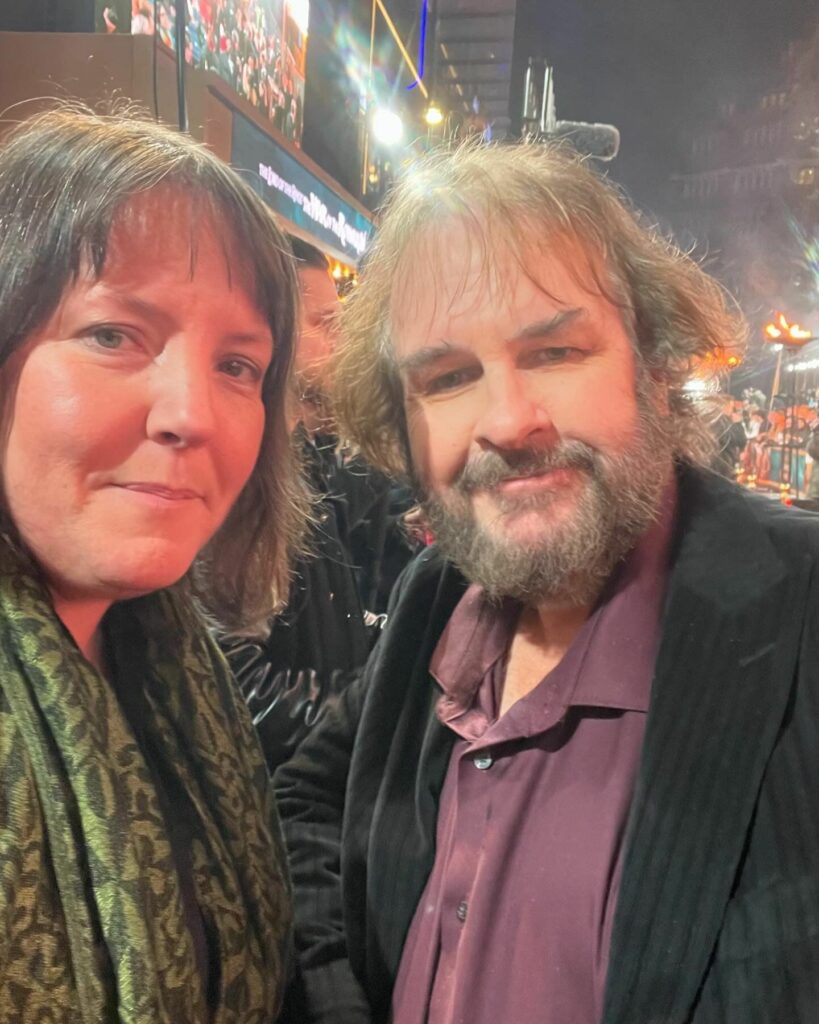
Peter Jackson
And lastly, Peter Jackson, the ‘godfather’ of this of Middle-earth, impressed his excitement for other perspectives, styles, and artistic interpretations of Middle-earth. He said as they were returning to Middle-earth, he didn’t want it to compete with the Lord of the Rings and The Hobbit, so “handing it over to a brilliant animator and director like Kenji Kamiyama would at the very least give us an interesting result.” He said it was so exciting to sit back and fell like he was back in the world that he knew watching early cuts, and it only got stronger as the production moved ahead. He was excited to have anime come into the portfolio, although he didn’t know if there’d be another anime to follow, and he mentioned The Hunt for Gollum, Andy Serkis’s upcoming film. He referred to that film as a ‘psychological thriller,’ and was excited for exploring Middle-earth in a different way.
Peter Jackson’s version of Middle-earth in different styles? From informed, and passionate creators who aren’t afraid to take a chance on creative practices? Yes. Please.
Maggie Parke with Peter Jackson
Dr Maggie Parke has her PhD in Film Adaptation and Fan Engagement, and lectures with Signum University. She is the director of Signum Studios, and produces and co-presents on Rings & Realms.
If you haven’t yet seen The Lord of the Rings: The War of the Rohirrim, what are you waiting for? Treat yourself to a voyage back to Middle-earth, and enjoy seeing Rohan, Meduseld, and other familiar sights on the big screen once again.
If you’re curious to know more about this particular story from Tolkien, and its adaptation to the big screen, we have good news for you! TheOneRing.net is partnering with the team at Rings and Realms to create a deep dive documentary all about The Lord of the Rings: The War of the Rohirrim. Find out more about this exciting project, here.
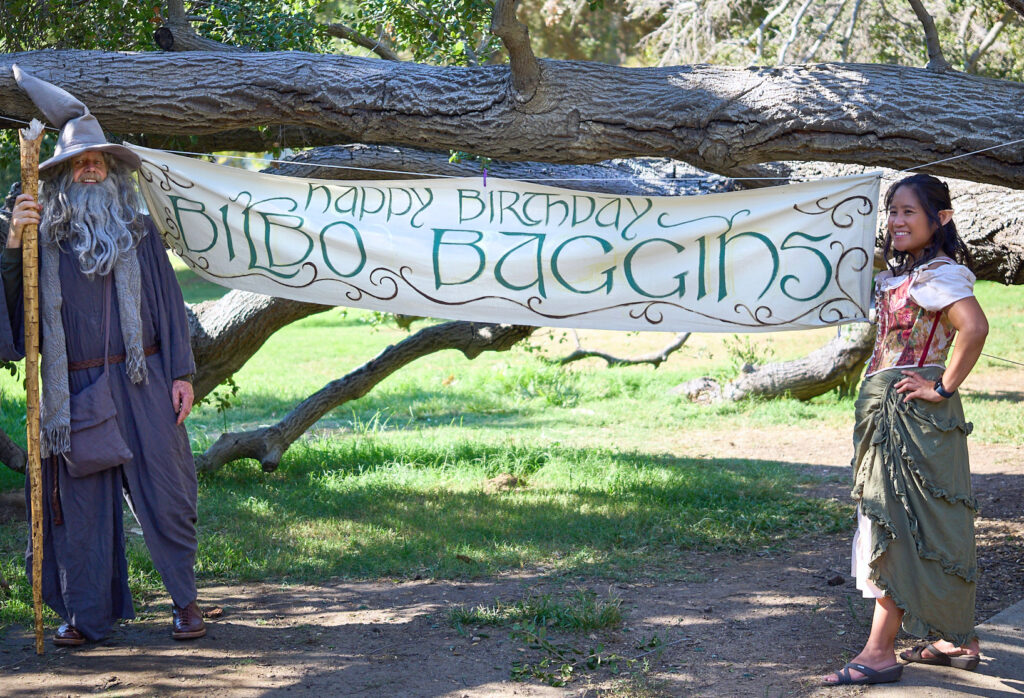
On September 22nd, the very date of Bilbo’s and Frodo’s birthdays, a large group of Hobbits, Elves, Dwarves, Men, Wizards, and well-behaved Wargs, gathered for a day of merriment, feasting, and activities.
The Party took place under the sheltering trees of Griffith Park, in the Mineral Wells picnic area, close by a meandering river. The day was warm, but not too warm. The sun high and bright. The leaves sparkled green and gold in a fair breeze which ruffled the Baggins’ Birthday banner and the feathers adorning Hobbit hats. Tents dotted the landscape: an Elven enclave here, a Dwarven fortress there, a Hobbit hole beneath a tree.
The banqueting table was laden with dishes–pulled pork, barbecue chicken salad, spicy sausages, cheese samplings, Lembas, watermelon, pasta salad (I could go on and on, but it’s making my mouth water all over again.) There were even two big jugs of delicious homemade apple brew crafted from a long list of enticing ingredients.